Chapter 06
Ductwork: The Hidden Part of Home Comfort
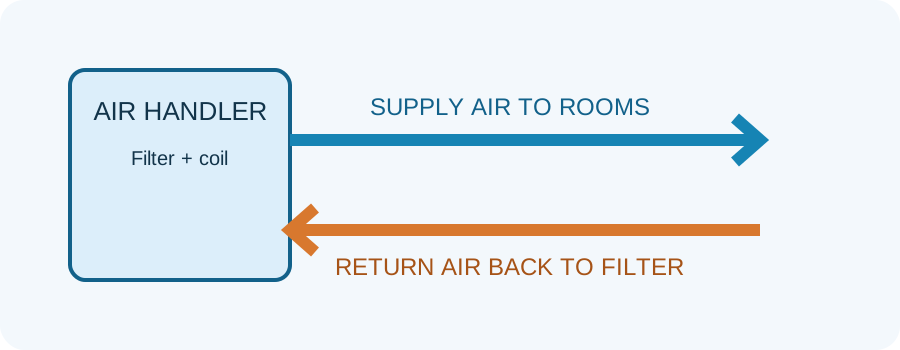
Ducts carry conditioned air from the air handler to rooms and return air back to the equipment. Because much of the duct system may be in an attic, garage, or crawlspace, problems can go unnoticed.
Leaky or disconnected ducts can waste conditioned air and may draw dusty, hot, or humid air into the system. Poor insulation can allow cooled air to warm up before it reaches a room. Crushed flex duct, closed dampers, blocked returns, and poorly designed transitions can restrict airflow.
Homeowners can look for simple clues without entering unsafe spaces: a room that is persistently uncomfortable, weak airflow at a register, excessive dust, unusual whistling, or a return grille that is blocked by furniture. Keep supply registers and return grilles open and unobstructed unless a technician gives a specific reason otherwise. Closing many registers can upset system airflow and pressure.
Do not crawl into an attic or tight space to inspect ducts if access is unsafe, temperatures are extreme, or there are electrical, structural, or pest hazards. Do not tape or seal ducts with ordinary household duct tape. Proper duct sealing uses materials and methods designed for HVAC systems.
A professional evaluation may include checking accessible duct connections, insulation, static pressure, airflow, and temperature differences. Ask the technician to show you the problem and explain which repairs are necessary. If duct sealing or insulation is recommended, request a description of the affected sections and how the work will be verified.
First Coast homeowner note: Describe the room, not just the duct
Tell the contractor which room is uncomfortable, whether the problem occurs at a particular time, and whether doors are usually open or closed. A proper assessment may involve more than the ductwork.
Editorial sample for this fictional demonstration brand.