Chapter 09
Humidity, Condensation, and Indoor Air
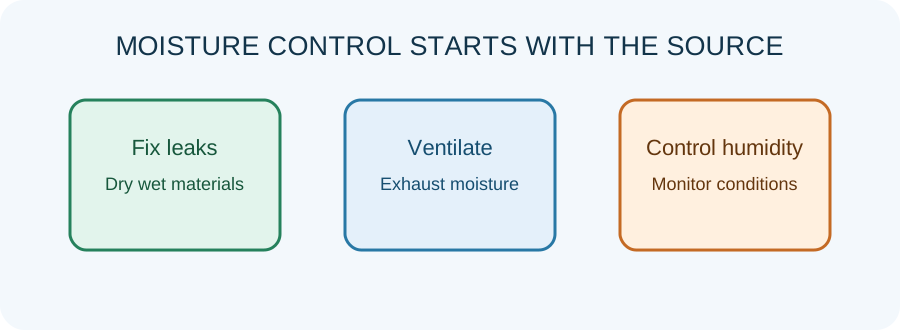
In humid climates, comfort depends on moisture control as well as temperature. Relative humidity describes how much water vapor is in the air compared with the amount the air could hold at that temperature. A room can feel clammy even when the thermostat setting seems reasonable.
The Florida Department of Health advises keeping indoor relative humidity below 60 percent to help prevent mold conditions. The EPA commonly recommends 30–50 percent where practical. These are general indoor-environment recommendations, not a diagnosis or a promise that mold cannot grow.
Use a simple hygrometer to understand indoor conditions over time. Readings can vary by room and device. If humidity remains high, check for obvious moisture sources such as plumbing leaks, roof leaks, wet carpets, unvented bathroom fans, or damp materials. Use kitchen and bathroom exhaust fans that discharge outdoors.
An air conditioner removes moisture while it runs, but it may not control humidity adequately if it is oversized, short-cycling, poorly maintained, or affected by airflow or drainage problems. A separate dehumidifier may be appropriate in some homes, but it adds heat to the space and requires correct drainage and maintenance. Ask a qualified professional to investigate persistent high humidity before buying equipment.
If you see visible mold, water stains, or recurring musty odors, address the moisture source. Do not assume that spraying fragrance or painting over a stain solves the problem. Large areas, recurring growth, contaminated materials, or suspected HVAC-system contamination call for qualified help. The Florida Department of Health and EPA provide guidance on moisture and mold.
First Coast homeowner note: Moisture deserves attention
In humid weather, note persistent musty odors, visible moisture, or water where it does not belong. Do not assume an HVAC adjustment alone will solve a building-moisture problem.
Editorial sample for this fictional demonstration brand.